
Buying cryptocurrency is only one part of owning it. The next question is often more important: where should you keep it?
Crypto wallets generally fall into two broad categories-hot wallets and cold wallets. Both help users manage the private keys needed to access and authorize transactions involving cryptocurrency, but they approach security and convenience very differently.
Understanding Hot Wallet vs. Cold Wallet is especially important because blockchain transactions usually do not come with the same recovery systems people expect from traditional banking.
If someone steals your private key or wallet backup, recovering the assets may be extremely difficult or impossible.
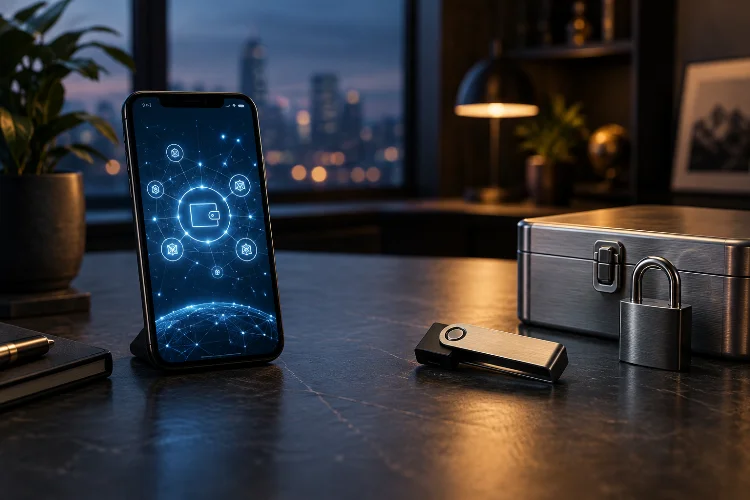
Hot wallets are connected to internet-enabled devices, making them convenient for frequent transactions and decentralized applications. Cold wallets keep private keys offline, reducing exposure to remote attacks and making them popular for longer-term storage.
Neither option is automatically perfect for everyone. The better choice depends on how often you use your crypto, how much security you need, and how comfortable you are managing your own keys.
1. What Is a Cryptocurrency Wallet?
A cryptocurrency wallet does not literally store coins in the same way a physical wallet holds cash.
Cryptocurrency remains recorded on its blockchain. The wallet manages the cryptographic information-particularly private keys-that allows users to authorize transactions associated with blockchain addresses.
NIST describes blockchain wallets as software or systems capable of storing private keys, public keys, and associated addresses. Private keys must remain secret because they are used to authorize control over digital assets.
A simple way to think about it is this:
Your blockchain address is somewhat like an account number that people can use to send you assets. Your private key is closer to the secret authorization mechanism that proves you have the right to move them.
This is why wallet security matters so much.
Someone does not necessarily need to physically steal your phone or hardware device to take cryptocurrency. If they obtain the information needed to recreate or control your wallet, they may be able to access the assets.
2. What Is a Hot Wallet?
A hot wallet is a cryptocurrency wallet operating on an internet-connected device.
Common examples include mobile wallet apps, desktop wallets, and browser-extension wallets. Because the device regularly connects to the internet, users can access blockchain networks quickly and easily.
This makes hot wallets especially useful for active crypto users.
Suppose you regularly swap tokens, purchase NFTs, interact with decentralized finance applications, or send cryptocurrency to other people. A hot wallet can make those activities relatively convinient because you do not need to connect a separate offline device every time.
Bitcoin.org describes hot wallets as wallets running on internet-connected devices such as computers or phones, making them useful for everyday payments.
The trade-off is increased exposure.
Because private-key information exists within an online environment, hot wallets can face threats from malware, phishing attacks, malicious browser extensions, compromised devices, and fake applications.
That does not mean every hot wallet is unsafe. It means the security model requires greater attention to online threats.
3. What Is a Cold Wallet?
A cold wallet keeps private keys offline rather than storing them directly within an internet-connected environment.
A hardware wallet is the most familiar example. These are dedicated physical devices designed to generate and protect private keys while keeping sensitive information isolated from everyday computers or smartphones.
Bitcoin.org describes offline wallets, also known as cold storage, as an approach that can provide a high level of protection for savings when implemented correctly.
Ethereum.org similarly lists hardware-based wallets as an option for long-term storage because the keys can remain offline while assets are being held.
A cold wallet does not mean cryptocurrency itself goes “offline.”
The tokens still exist on the blockchain. What stays offline is the private-key material needed to authorize transactions.
When you want to move crypto, a hardware wallet can typically sign the transaction without exposing the private key directly to the connected computer.
This separation is the main security advantage.
4. Hot Wallet vs. Cold Wallet: The Main Differences
The biggest difference comes down to connectivity and exposure.
| Feature | Hot Wallet | Cold Wallet |
|---|---|---|
| Internet Connection | Usually connected | Private keys kept offline |
| Convenience | Very high | Usually less convenient |
| Remote Attack Exposure | Higher | Lower |
| Best For | Frequent transactions | Long-term storage |
| Typical Form | Mobile, desktop, browser app | Hardware or offline setup |
| Cost | Often free | Hardware usually costs money |
| DeFi Access | Easy | Often requires extra steps |
| Key Responsibility | User or custodian | Usually user |
Hot wallets prioritize accessibility. Cold wallets prioritize isolation.
For example, someone holding $200 worth of cryptocurrency for occasional online transactions might find a mobile wallet perfectly practical. Someone storing a significant long-term crypto position may prefer to keep most assets in cold storage and maintain only a smaller amount online.
Bitcoin.org compares this idea to carrying cash: keeping a small amount available for everyday use while securing larger savings more carefully.
5. Are Cold Wallets Always Safer?
Cold wallets reduce an important category of risk: remote attacks targeting online private keys.
But “offline” does not mean “impossible to lose.”
Cold-wallet users can still make mistakes. A physical hardware device can be lost, damaged, or stolen. Users can also fall for phishing attacks that trick them into revealing their wallet backup or approving a malicious transaction.
The most critical vulnerability is often the recovery phrase or wallet backup.
Many wallets provide a sequence of words that allows the wallet to be reconstructed if the original device becomes unavailable. Trezor explains that its wallet backup can restore access when a device is lost, damaged, or reset and recommends keeping that backup offline and private.
If someone obtains that backup, physical possession of the hardware wallet may no longer matter.
For this reason, taking a screenshot of a recovery phrase, uploading it to cloud storage, emailing it to yourself, or typing it into an unknown website can undermine the benefits of cold storage.
Security depends on the entire setup, not just the device.
6. Hot Wallets Are Better for Frequent Crypto Activity
Cold storage is excellent for isolation, but it can introduce friction.
Imagine interacting with a decentralized application several times every day. Repeatedly connecting a hardware device and manually confirming transactions can become inconvenient.
Hot wallets are designed for this more active environment.
They can make it easier to connect to decentralized exchanges, NFT marketplaces, blockchain games, and DeFi protocols. This accessibility is why many crypto users maintain a hot wallet even when their main holdings remain elsewhere.
However, frequent interaction also increases opportunities for mistakes.
Users may connect to fake websites, sign malicious approvals, install fraudulent wallet extensions, or accidentally send funds to the wrong adress.
A sensible approach is to avoid keeping more cryptocurrency in an active wallet than necessary for everyday activity.
Think of the hot wallet as your spending wallet—not necessarily your vault.
7. Cold Wallets Make More Sense for Long-Term Storage
If you plan to hold cryptocurrency for months or years without frequently moving it, cold storage becomes more attractive.
The goal is to reduce unnecessary exposure.
A private key that never sits directly on an ordinary internet-connected computer has fewer opportunities to be stolen by malware or compromised software. Hardware-wallet manufacturers specifically design their devices around this principle.
Cold wallets may therefore be appropriate for larger holdings, long-term savings, or assets that do not need frequent access.
But users should plan carefully for physical security and recovery.
The hardware device and its backup should usually be stored seperately so that one accident does not destroy both. A secure backup also needs protection from fire, water, theft, and unauthorized access.
Your recovery system matters just as much as the wallet itself.
8. What About Custodial vs. Non-Custodial Wallets?
Another important distinction is often confused with hot versus cold storage.
A custodial wallet means another organization controls the private keys on your behalf. Cryptocurrency exchanges are a common example.
A self-custody or non-custodial wallet means you control the keys.
These categories are not exactly the same as hot and cold.
For example, an exchange account can provide convenient online access without giving the user direct possession of private keys. A mobile self-custody wallet may also be hot, but the user personally controls the keys.
Bitcoin.org warns that when a third-party service controls the keys, users depend on that service’s security and availability.
Self-custody removes some intermediary risk, but it transfers responsibility to you.
Lose your credentials without a usable backup, and there may be no customer-support team capable of restoring access.
9. Should You Use Both a Hot and Cold Wallet?
For many users, the answer may be yes.
You do not necessarily have to choose one wallet type for everything.
A practical setup could resemble traditional personal finance. Your hot wallet works like the cash or debit card you use regularly, while your cold wallet acts more like secure long-term storage.
For example, someone might keep a relatively small amount in a mobile wallet for transactions while holding the majority of their cryptocurrency in a hardware wallet.
Bitcoin.org specifically notes that users can maintain multiple wallets, such as a mobile wallet for daily spending and a hardware wallet for savings.
This approach limits how much is exposed if one wallet becomes compromised.
The exact balance depends on your activity, experience, risk tolerance, and how much cryptocurrency you need to recieve or spend regularly.
The Hot Wallet vs. Cold Wallet decision is mainly a trade-off between convenience and security.
Hot wallets stay connected to internet-enabled devices, making them useful for frequent payments, DeFi activity, token swaps, and other everyday blockchain interactions.
Cold wallets keep private keys offline, reducing exposure to remote attacks and making them attractive for long-term storage.
Neither approach removes every risk. Hot wallets can be vulnerable to online threats, while cold-wallet users must carefully protect their physical devices and recovery information.
For many people, combining both approaches can provide a practical balance: keep smaller amounts in a hot wallet for regular activity and consider cold storage for assets that do not need frequent access.
Whatever option you choose, learn how its private keys, backups, and transaction approvals work before transferring significant funds.